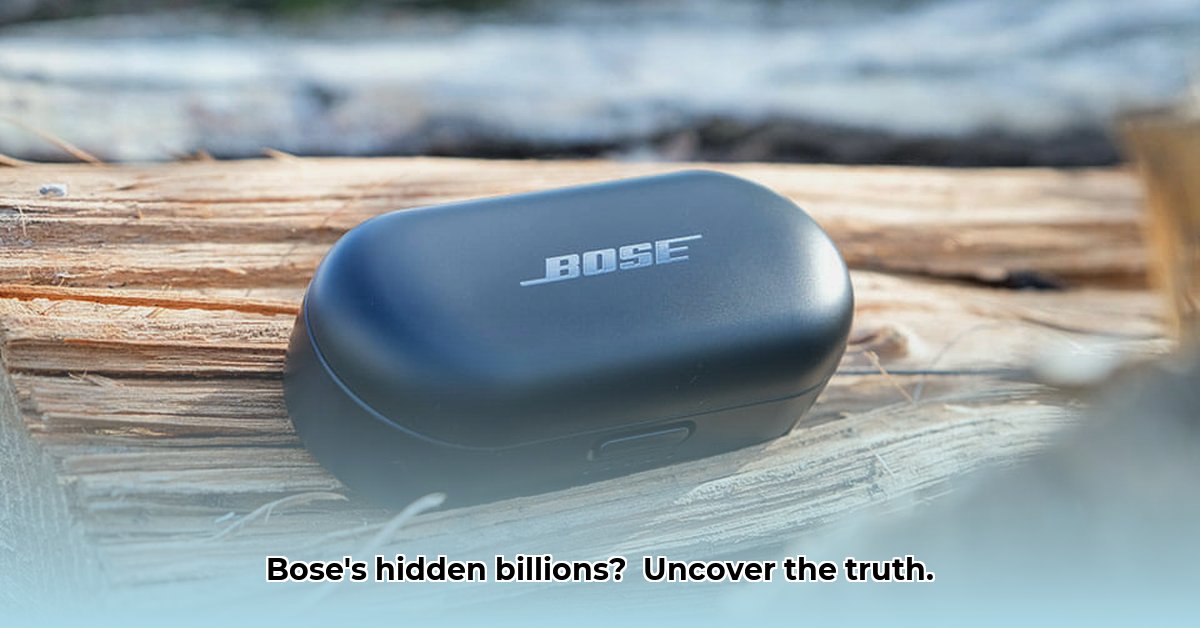
Bose. The name synonymous with high-quality audio equipment. But how much is this privately held giant actually worth? Pinpointing a precise net worth is impossible due to the company's private status, making a definitive answer elusive. However, by analyzing revenue estimates, market position, and strategic moves, we can construct a compelling picture of Bose's financial health.
Peeling Back the Layers: Estimating Bose's Value
Determining Bose's net worth requires indirect methods. Industry experts suggest annual revenue exceeding $3 billion. Considering this impressive income, coupled with its robust brand reputation and broad product diversification, a reasonable estimate places Bose's net worth somewhere between $2.5 billion and $3 billion. It's crucial to remember this is an informed estimate based on available data, not a precise, audited figure.
The Secrets to Bose's Success: More Than Just Great Sound
Bose's financial success stems from a potent combination of factors. Its legendary brand commands customer loyalty, translating to consistent sales. Groundbreaking innovations in noise-canceling technology, a major revenue driver, further solidify its position. Product diversification—headphones, speakers, car audio—mitigates risk and fosters sustained growth. Finally, clever marketing strategies maintain a premium brand image, bolstering demand.
The Audio Battlefield: Navigating a Competitive Landscape
The audio industry is fiercely competitive. Bose maintains its edge through continuous innovation, regularly introducing new technologies and product upgrades. However, balancing premium pricing with cost-conscious competitors presents an ongoing challenge. Maintaining this balance is critical to its long-term success.
Looking Ahead: Challenges and Opportunities on the Horizon
Despite its apparent financial strength, Bose faces challenges. The rise of smart speakers and wireless audio demands adaptation to evolving consumer preferences. Strategic partnerships or acquisitions could accelerate growth and fuel innovation. Consistent investment in research and development remains crucial for maintaining a competitive edge. Can Bose continue justifying premium pricing? The answer hinges on adapting to market shifts and exceeding customer expectations.
Who Cares About Bose's Net Worth? A Look at the Stakeholders
Bose's financial health has broad implications:
| Stakeholder Group | Short-Term Interests | Long-Term Interests |
|---|---|---|
| Bose Leadership | Maintaining profitability, outcompeting rivals, ensuring operational efficiency | Sustained growth, market expansion, enhancing global brand recognition |
| Private Investors | High investment returns, maintaining or increasing valuation | Long-term growth, potential lucrative exit strategies (e.g., IPO) |
| Competitors | Gaining market share, developing superior products, undercutting prices | Innovation, market disruption, targeting underserved market segments |
| Consumers | High-quality, reliable products offering excellent value | Continuous innovation, enhanced smart device integration, superior customer service |
How to Analyze Bose Corporation's Financial Performance Without Public Data
Estimating Bose's net worth indirectly requires a multi-faceted approach:
Competitive Benchmarking: Analyze publicly traded competitors to gain a relative understanding of Bose's market position and potential revenue. Remember that direct revenue comparisons are limited without profit margin data.
Competitive Landscape Analysis: Identify key competitors, analyzing their strategies and financial performance (where available) to gauge Bose's standing within the market. A thriving market generally indicates favorable conditions even for private companies.
Inferential Analysis: Leverage indirect sources like news articles, press releases, and patent filings to infer financial health. New product launches and trademarks suggest investment and strategic market positioning.
Interpreting Revenue Estimates: While imprecise, revenue estimates provide a general indication of scale. Treat these figures cautiously, considering their potential margin of error.
Strategic Impact Assessment: Evaluate how Bose's strategic moves—acquisitions, new product lines, or marketing campaigns—affect its overall financial health and future prospects. Successful initiatives strengthen the bottom line; failures have the opposite impact.
In conclusion, while a precise net worth remains elusive, analyzing available data provides a clear picture of Bose's substantial financial strength and market position. Its continued success hinges on its ability to navigate the ever-evolving audio landscape, maintain its innovative spirit, and consistently deliver exceptional customer experiences.